Key Takeaways
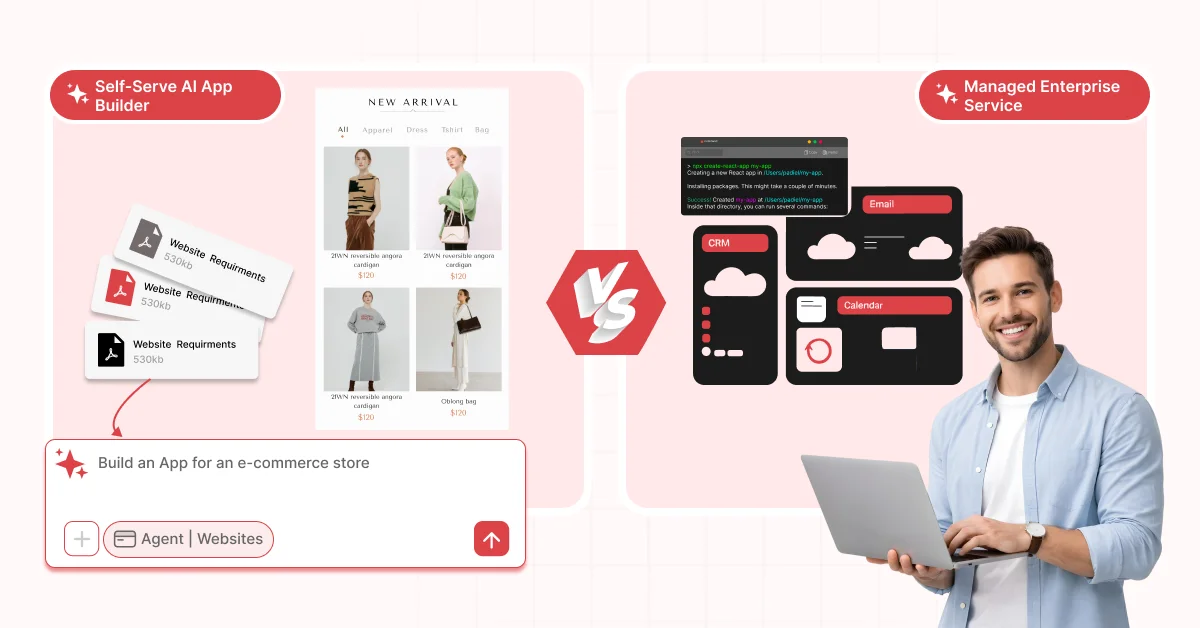
- Self-serve AI app builder vs. managed enterprise service: the main difference is in ownership and responsibility, setup and customization, technical skills, cost and pricing models, reliability and scalability.
- Self-serve AI app builders offer direct, automated access to visual dashboards.
- With managed enterprise service, you get the dedicated specialists, custom workflows, and high-level governance executed on your behalf.
- Security and governance is the reason because they dictate how an organization controls risk and regulatory compliance at scale.
- Selecting the right approach depends on different factors such as ownership and responsibility, technical skills, control and flexibility, and reliability and flexibility.
- Connecting with Nativly can help you compare automated versus hand-held execution by offering you complete support in building apps.
Create your next AI app on your terms, but first, evaluate how much support your team needs. A self-serve platform lets you experiment and build independently, while a managed enterprise service provides hands-on support.
Therefore, the question is “which approach best fits your team’s goals, skills, and resources?”
In this guide, we clearly explain the differences between a self-serve AI app builder and a managed enterprise service platform.
Whether as a startup or an enterprise, if you are exploring your first AI app or scaling a business solution, understanding the differences in detail is helpful.
Let’s get ahead of the same.
What is a Self-Serve AI App Builder?
A self-serve AI app builder is a cloud or low-code platform where your internal team directly uses the dashboards, natural language prompts, and visual editors to prototype and deploy AI applications.
A self-serve AI app builder is a do-it-yourself tool; your team builds and manages the AI app using the platform. It allows anyone, regardless of technical background, to create, test, and deploy fully functional software applications by describing their idea in plain English.
The core features of the self-serve AI app builder are:
- Full Stack Generation
- Built-in Deployment
- Natural Language App Generation
- Test and preview tools
- Ready-made templates and components
Connecting with a self-serve AI app builder helps users with:
- Rapid prototyping
- No coding required
- Effortless iteration
- Lower development costs
- Built-in integration & templates
But here is one of the core questions that arise is ”how to choose an AI app builder for your enterprise?”
Well, the right process depends on your project’s size, technical needs, long-term scalability, and budget.
You can also check out the enterprise use cases for AI app builders.
Now, let’s get started with the managed enterprise service.
What is a Managed Enterprise Service?
A managed enterprise service is an ongoing business model where an organization outsources the daily operations related to app development.
This service takes ongoing responsibility for operating, monitoring, maintaining, and securing an organization’s IT infrastructure, applications, and business processes.
Core features of managed enterprise services:
- Proactive monitoring
- Service level agreements (SLAs)
- Cloud managed services
- Layered cybersecurity operations
The key benefits offered by managed enterprise services are:
- Assist in meeting compliance requirements
- Offer custom solutions tailored to the business needs.
- Dedicated technical support
- Enterprise-grade security and access control
Here, the majority of startups and enterprises often ask, “What is the core difference between a self-serve AI app builder vs. a managed enterprise service?”
The major difference can be identified in the context of a self-serve AI app builder vs. a managed enterprise service.
A self-service AI app builder is a do-it-yourself tool where your team builds and manages the AI app using the platform.
However, a managed enterprise service means a provider helps build, run, and support app development services for startups and enterprises.
Let’s check the differences between self-service AI app builder vs. managed enterprise service in the next section.
Self-Serve AI App Builder vs. Managed Enterprise Service
A self-serve AI app builder is a cloud-based and prompt-driven platform where the user can design, build, and deploy applications themselves using natural language prompts and pre-configured blocks.
However, a managed enterprise service is all about outsourcing development team services to the developers.
Let’s discuss the differences between self-service AI app builder vs. managed enterprise service:
| Core Element | Self-Serve AI App Builder | Managed Enterprise Service |
| Who does the work | Your team prompts, tests, and publishes | Vendor engineers plan, build, and ship |
| Speed to first version | Hours to days | Days to weeks (scoping first) |
| Cost model | Monthly subscription or credits | Custom quote or project-based |
| Skills needed | Low coding skill, but someone must own the project | Minimal internal technical skill |
| Internal time | High (prompting, QA, fixes) | Low (reviews and approvals) |
| Customization and integrations | Standard patterns and common APIs | Complex logic and legacy systems |
| Security and governance | Your team sets guardrails and reviews | Built in with IT oversight and sign-off |
| App-store submission | You handle it and risk rejection | Handled by the vendor |
| Support and accountability | Self-help, community or ticket support | Dedicated team, SLA-style accountability |
| Code ownership | Depends on platform export options | Agreed in the contract |
| Scalability | Best for pilots, MVPs and simple apps | Built for complex, high-volume apps |
| Best for | Validation, internal tools, small teams | Regulated data, tight deadlines, no builder capacity |
Here is all about the brief on the differences between a self-serve AI app builder vs. managed enterprise service:
1. Ownership and Responsibility
Self-Service AI App Builder: Ownership and responsibility are for the app, where your team uses an AI app builder like Nativly to build the app.
Managed Enterprise Service: The provider handles much of the setup and ongoing work.
2. Setup and Customization
Self-Service AI App Builder: Self-service AI app builders such as Nativly directly dictate how effectively an application can transition from a generic AI wrapper into a valuable, domain-specific enterprise asset.
Managed Enterprise Service: Managed enterprise services offer setup and customization as a key difference because they shift the labor and technical complexity from internal staff to the dedicated vendor specialists.
3. Technical Skills Needed
Self-Service AI App Builder: Your team needs the skills to build, troubleshoot, and maintain it.
Managed Enterprise Service: The developers require technical skills such as enterprise integration & API architecture, streaming & real-time infrastructure, business-to-AI translation, security & compliance oversight.
4. Control and Flexibility
Self- Service AI App Builder: You choose the app’s features and configure its AI instructions, and you decide when to publish the app and what level of control you want for your app.
Managed Enterprise Service: The provider does more work, which means they have more control over managing the app for you. However, you can still set requirements and approve important decisions.
5. Cost and Pricing Models
Self-Service AI App Builder: The cost and pricing models for the self-service AI app builder depend on whether you choose the low-code or no-code AI app builder, or an AI subscription platform. For Nativly, the pricing model varies from $19/month to $199/month; thus, this cost can vary from one builder to another.
Managed Enterprise Service: For managed enterprise services, the provider can cost you from $20,000 to $200,000, depending on the provider to another.
Bonus Read: How Much Does it Cost to Build a Mobile App Via an AI App Builder?
6. Reliability and Scalability
Self-Service AI App Builder: Reliability and scalability vary based on how much architectural control, data schema validation, and cloud-native engineering they hide behind automated prompt-to-app generation.
Managed Enterprise Service: The differences between a self-serve AI app builder vs. a managed enterprise service vary based on the service model tier, automation level, architectural design, and SLA. Managed enterprise service’s scalability is based on the SLA uptime tiers, redundancy, and failover.
7. Security and Governance
Self-Service AI App Builder: Yes, self-service AI app providers do offer security and governance, but it too varies based on platform and plan. AI app builders such as Nativly specifically do describes the enterprise security and governance as important capabilities of an AI app builder.
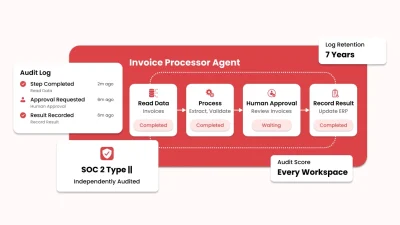
Managed Enterprise Service: Managed enterprise service uses security and governance as a key factor by shifting compliance and protection from a reactive, check-the-box, and outcome-driven approach.
8. Data Ownership and Portability
Self-Service AI App Builder: This AI app builder offers users rights to the generated code and backend assets while keeping certain platform dependencies in place.
Managed Enterprise Service: Outsourcing the ongoing monitoring, maintenance, and security of IT infrastructure to a specialized third-party service provider that offers security for your data can be reliable. Additionally, data ownership and portability can be easy here with the providers.
Now, one of the questions that arises here is “Which model works best for me between self-serve AI app builder vs managed enterprise service?”
Well, it will be best if you can go for a hybrid model that comes with both building an app quickly with an AI app builder and effective references from experienced developers. It all depends on the size of your project and the type of project that you want to build.
Also Read: AI App Builder vs Traditional Development
To learn more about the relevant areas and factors that you should consider for your model or project, let’s check out the following section.
Which Model Best Fits Your Project?
Selecting among a self-service AI app builder vs. a managed enterprise service can be a tough decision for a startup or an enterprise like you. However, you should consider the following steps while selecting the right model for your project:
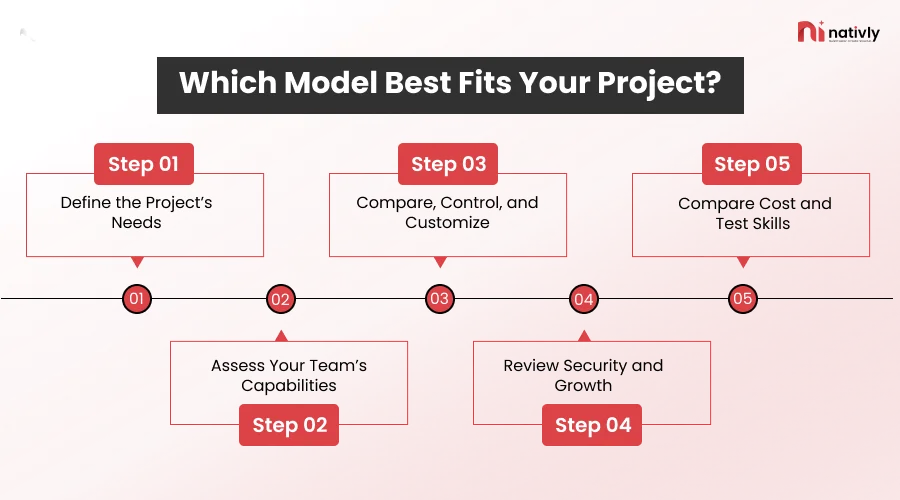
Step 1: Define the Project’s Needs
The first and prime step is to define the project’s needs by setting the goal, selecting the required features, data sources, and even success measures.
In both cases, whether it’s about an AI app builder or a managed service, you should have a clear and planned goal for your business.
Step 2: Assess Your Team’s Capabilities
Identify what your team already knows. To select among self-serve AI app builders and managed enterprise services, your team should be very well aware of using AI app builders in case you choose this approach.
Identify whether you already have developers on your team who know well about app building, or using the AI app builders smartly, or not.
Step 3: Compare, Control, and Customize
Now, it’s time to compare the skills of the different engineers and even test which AI app builder is suitable for your project.
In case of tools comparison or checking AI app builders, you should evaluate the accuracy and reliability of different AI tools.
Step 4: Review Security and Growth
Reviewing security and growth is an important factor if you compare an AI app builder with managed enterprise services.
Here, you should check whether the AI app builder offers security, or whether the managed enterprise services are reliable enough to be trusted.
Step 5: Compare Cost and Test Skills
For cost and testing skills, you need to compare an AI app builder to a managed enterprise service, which requires you to look for past initial license tags, and then test how each option handles cost and what skills you require that they can offer.
This is an important step, as here you will invest all the resources into your project.
Ready for App Development? Connect Nativly
If you’re ready to create an app but still confused between these two options. Selecting a hybrid approach can help.
This all means that you need a platform that can offer you both a quick delivery of the app and a managed enterprise service.
Thus, an AI App Builder like Nativly can be helpful here.
Here’s why you should go for Nativly:
- Offers a hybrid approach: You have both options- a self-serve AI app builder and managing the app with the help of an expert team. AI app builder + experts in app development.
- Plain Language Idea to Reality: Within a few hours, you can convert plain language ideas and prompts into reality with Nativly.
- Source Code Export: Your source code is safe, and you get complete IP protection with Nativly.
Conclusion
The core differences between a self-serve AI app builder vs. managed enterprise service are ownership and responsibility, setup and customization, control and flexibility, security and governance, technical skills required.
Selecting the best approach depends on defining the project’s needs, comparing the tools, reviewing security, and testing skills. Connecting Nativly can help you have a hybrid approach for your project.
FAQs
Q1. What is the core difference between a self-serve AI app builder vs. managed enterprise service?
With self-serve, your team builds and manages the app using a platform. With a managed service, a provider handles more of the building, setup, and ongoing support.
Q2. What is a self-serve AI app builder?
It’s a tool that lets your team create AI apps directly, often with templates or visual, low-code tools. Your team configures, tests, and maintains the app.
Q3. What is a managed enterprise service?
It’s a provider-led service that helps build, deploy, and maintain an AI app for your organization. It may include customization, integration, and ongoing support.
Q4. How do managed and self-serve options handle compliance and data governance?
Either approach can offer security and governance features; what matters is the specific platform, contract, and configuration. Managed providers may help with these tasks, but they don’t automatically guarantee compliance.
Q5. How much does managed enterprise app development cost?
Costs vary based on complexity, integrations, usage, support, and security requirements. Request a tailored quote and compare setup fees, ongoing service charges, usage fees, and contract terms.
Q6. Will an AI-built app pass App Store review?
Not automatically. It must meet the store’s current rules for functionality, privacy, security, and content, regardless of how it was built.